
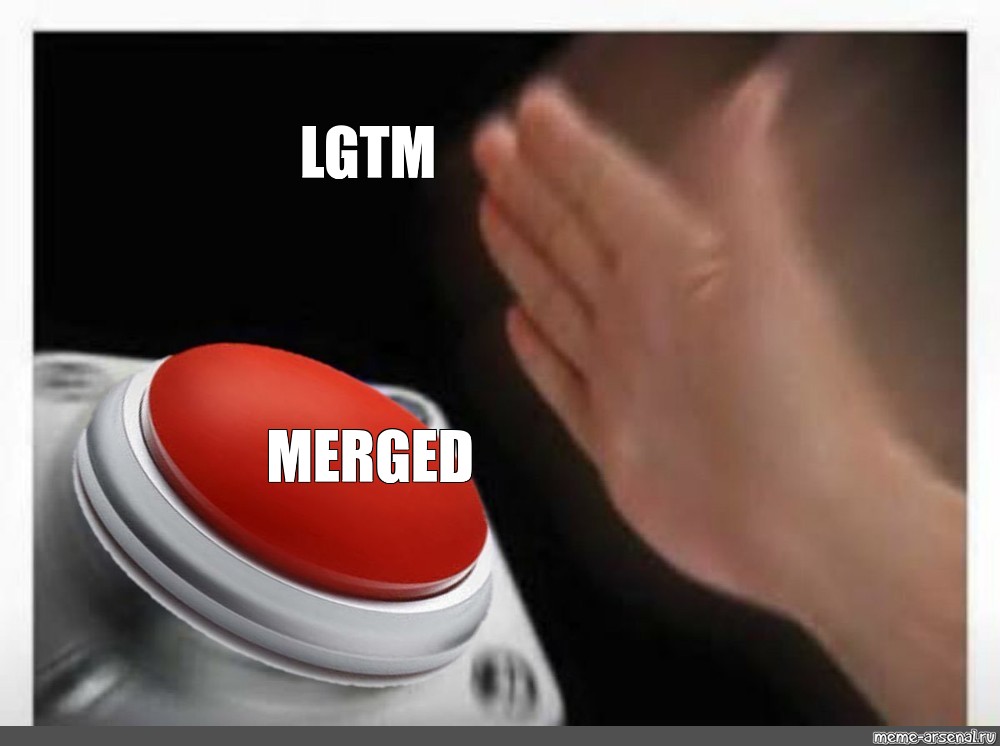
I don’t know when this started, or when I started to notice it, but so many bugs, tickets, pull requests and other artefacts of our work in software are signed off with:
Looks Good to Me
or even:
LGTM
Or even nothing at all.
I see this from testers, quality engineers, developers who do exploratory testing, everyone doing code reviews and I always wonder what the real story is. As looking good to you (or me) is a very personal thing and it might look terrible to someone else with a bit more context.
Don’t get me wrong, I often see bugs, tickets and pull requests that do look good to me. But I try and put a little message on there. It especially seems a shame that when a developer wants you to test something, you miss the opportunity by signing off with LGTM. Note something you tested, some small insight on what happened. Even if you noticed something adjacent to the changes that was weird. Or even some small way to leave the world in a better place than it was. These types of changes are excellent for suggesting testability improvements as you are saying:
This is good, lets get it live!
Which I find helps developers be open to small changes to improve the overall testing experience.
For example in your notes to send to the developer and add to the ticket, you could say:
Changes look good, lets go for it!
- I tested around the changes to the customer profile view with the new fields added, including the summary of their orders. I had a look at a new profile too, just to see how it looked with no order history.
- I had a look at it on a few devices but only the top usage ones, as I don’t think the change would cause device/OS specific problems, given we already retrieve profile information.
- I did notice that although error scenarios are already handled, the final catch for unspecified errors has no log line, so we could add that next time we do some improvements to the logs. I’ll add it to the list.
Takes a few minutes and invites feedback, but keeps the mood positive. As a quality engineer, when I pick up a ticket to test, I want it to be a bit of an event, where I get to provide examples of what good exploratory testing looks like.
Dare I also say it, I have seen this shorthand used when someone hasn’t tested something, or didn’t know how to and didn’t feel comfortable enough to say. There is a lot wrong in cultures where you either wave changes through without discussion or can’t say that you don’t know how to test something. This is rarely a testing problem, add it to the list of cultural problems masquerading as testing problems. Sometimes also developers don’t know how to add notes from their testing, so its a good coaching opportunity too.
Next time you see LGTM on a ticket, or are tempted to write it yourself, pause for a moment and see if there is a better story you can tell.
 Diagram Industries